St. Stephen’s Basilica: what to see, prices, tower view and more
Content
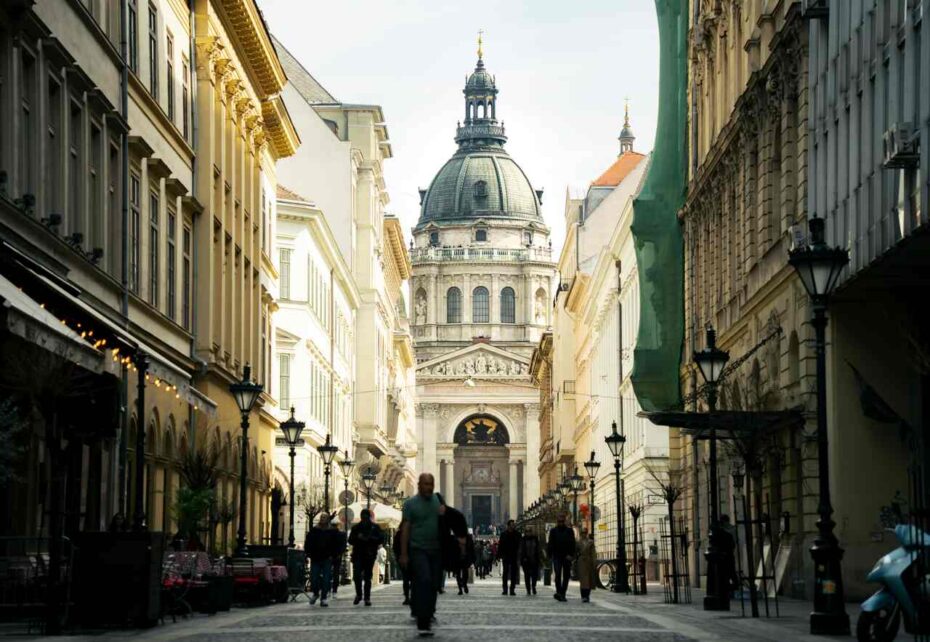
St. Stephen’s Basilica is one of Budapest’s most iconic landmarks. It's a place where architecture, spirituality and panoramic views all come together in the heart of the city.
Whether you’re visiting for the incredible 360-degree tower view, the grandeur of the interior, or simply to enjoy the lively square around it, the basilica is a must on any Budapest itinerary.
The basílica is a national symbol dedicated to Hungary’s first king, St. Stephen, and home to one of the country’s most important relics. Inside, you’ll find richly decorated chapels, marble columns, mosaics, a treasury, and one of the most beautiful domes in Central Europe.
Outside, Szent István tér is one of the most atmospheric squares in the city, filled with cafés, restaurants and seasonal events like the Christmas Market. And if you love views, the panoramic tower is one of the best places to admire Budapest from above.
In this guide, you’ll find everything you need to plan your visit to St. Stephen’s Basilica in Budapest: what to see, how to climb the tower, ticket information, mass times, opening hours, concerts, history, architecture and practical tips to make the most of your trip.
Iverview: why visit St Stephen's Basilica?
St. Stephen’s Basilica stands out not only for its architectural grandeur, but also for the variety of experiences it offers. Visitors can:
- explore a richly decorated interior filled with mosaics, sculptures and stained glass;
- admire the famous Holy Right Hand relic;
- attend organ concerts;
- and climb to the dome terrace for breathtaking 360-degree views of Budapest.
Because it sits right in the center of the city, the basilica is also incredibly easy to fit into any itinerary, whether you’re strolling through downtown, visiting nearby cafés or heading toward the Danube.
Where is St. Stephen’s Basilica located?
St. Stephen’s Basilica sits right in the heart of Budapest, in District V, surrounded by cafés, shops and many of the city’s most visited streets. Because of its central location, you can easily walk there from landmarks like the Parliament, the Danube River or Deák Ferenc tér.
Right in front of the basilica is Szent István tér, a lively pedestrian square that creates one of the most atmospheric entrances to any monument in Budapest. The wide open space is lined with gelato shops, restaurants and terraces, making it a natural place to sit outside, people-watch or photograph the basilica’s façade (especially at sunset, when the stone turns Golden).
Throughout the year, the square also hosts cultural events and seasonal markets, including one of the city’s most famous Christmas markets.
What to see inside St. Stephen’s Basilica
St. Stephen’s Basilica has several areas worth exploring, each offering a different perspective on the building’s history, art and significance.
The main church
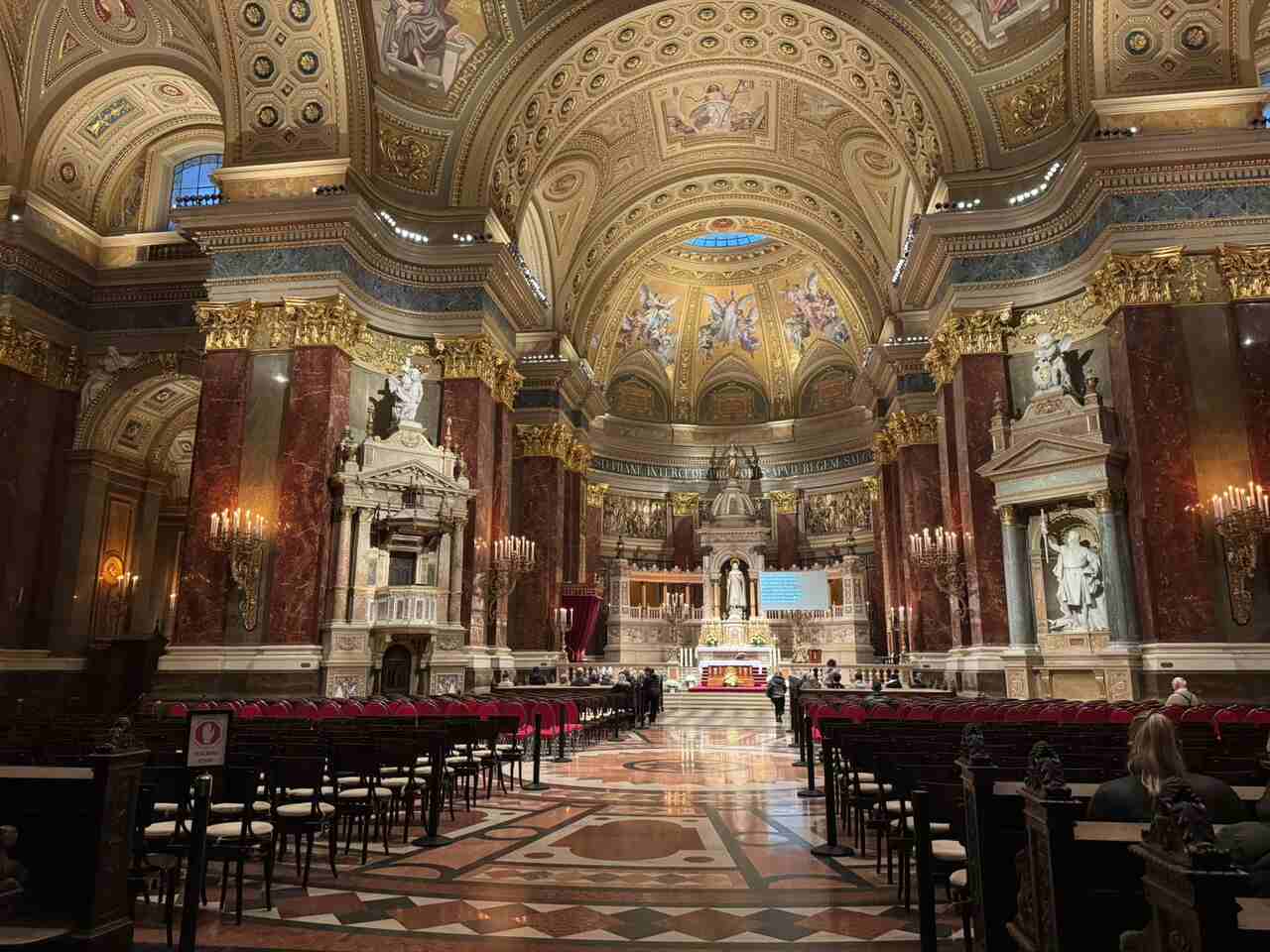
Stepping inside St. Stephen’s Basilica feels like entering a monumental hall of art and devotion. The church follows a Greek cross floor plan and is richly decorated with mosaics, marble columns, sculptures, and stained glass that create an atmosphere both grand and intimate.
During ceremonies, the space can hold up to 8,000 people, and the two bell towers house six bells.
At the heart of the church, the main altar stands beneath a striking canopy, featuring a Carrara marble statue of King St. Stephen holding the double cross and orb, symbols of royal and apostolic authority.
The basilica is also a cultural space, known for its exceptional acoustics and home to one of Europe’s grandest organs. Originally built in 1905, the instrument has been expanded and restored over the years and now features more than 7,500 pipes and a distinctive horizontal trumpet choir that projects from the façade.
The Treasury

Photo: St Stephen's Basilica Official Website
The Treasury of St. Stephen’s Basilica reopened in 2011 in a completely redesigned space, now three times larger than before. More than just a museum, it offers an intimate look into the basilica’s liturgical life, with many objects still used in ceremonies today.
The first hall showcases pieces connected to the building’s history: architectural models, plaster casts, papal documents, and special artworks such as a Herend porcelain copy of the Holy Crown and memorabilia from the basilica’s construction.
Deeper inside, the Treasury resembles a symbolic reliquary chapel, displaying some of Hungary’s most remarkable sacred objects. Here you’ll find ornate vestments, chalices, incense holders, candlesticks, and the country’s largest monstrance from 1938, along with items once belonging to Cardinal József Mindszenty.
It’s a peaceful and beautifully curated space, ideal for visitors interested in religious art, craftsmanship and the spiritual heritage of Hungary.
The Holy Right Hand
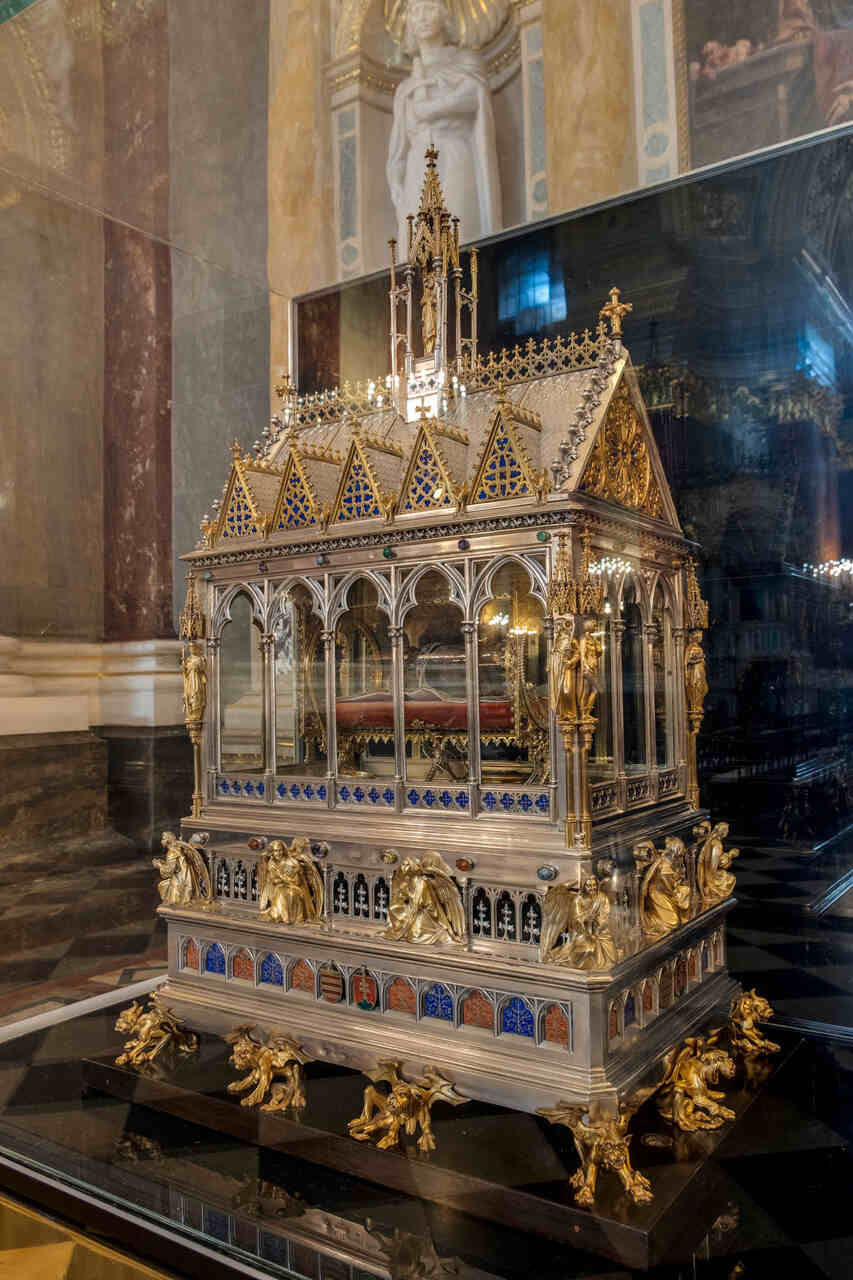
Photo: St Stephen's Basilica Official Website
Yes, the Holy Right Hand is exactly what it sounds like: the mummified right hand of King St. Stephen, Hungary’s first king.
After his death in 1038, the chapter of Fehérvár removed his embalmed body from its marble sarcophagus to protect it from desecration. During this process, the right hand was separated because it had remained intact and was believed to possess miraculous powers.
It was kept in the basilica’s treasury and, over the centuries, moved several times for safekeeping during wars and political turmoil.
Today, the relic is displayed in a double reliquary near the Altar of Our Lady of Hungary: an inner glass cylinder protected by an ornate neo-Gothic outer shrine designed in Vienna in 1862.
The panoramic tower
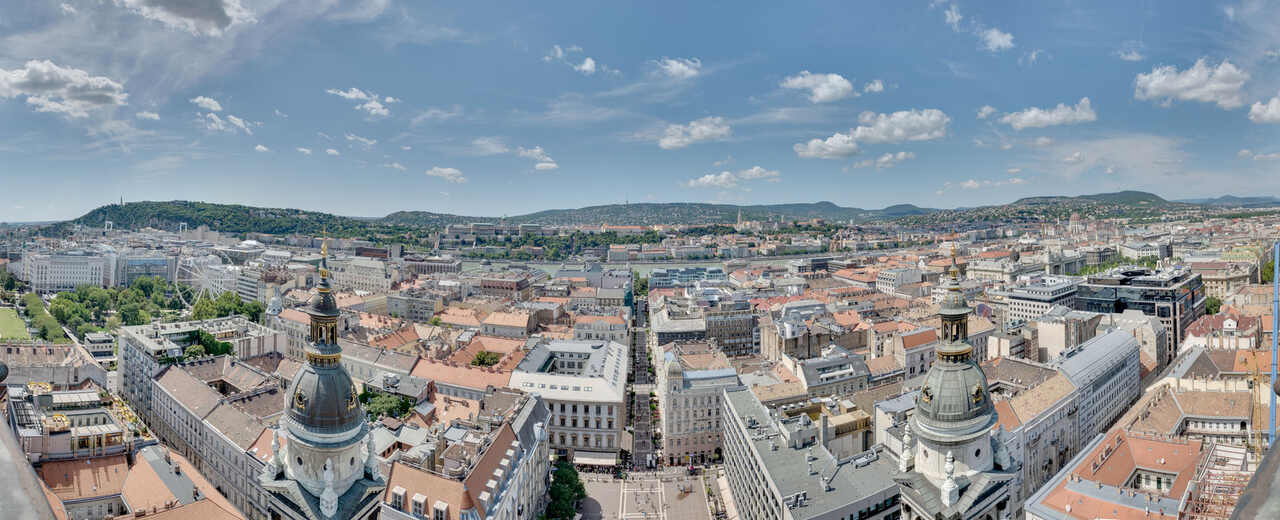
Photo: St Stephen's basilica Official Website
The basilica’s panoramic tower is one of the best viewpoints in Budapest, offering a full 360-degree panorama from a 65-meter-high stone terrace built around the main dome.
From up there, you can spot Parliament, Buda Castle, the bridges, the rooftops of Pest and even the distant hills. It’s the highest viewing platform on the Pest side, and absolutely worth the climb.
To reach the terrace, visitors have two options: climb the 304 steps that spiral up inside the structure, or take the elevators installed during the 2003 renovation, which make the ascent much easier.
Whichever route you choose, the view at the top is spectacular and one of the highlights of any visit to St. Stephen’s Basilica.
The façade
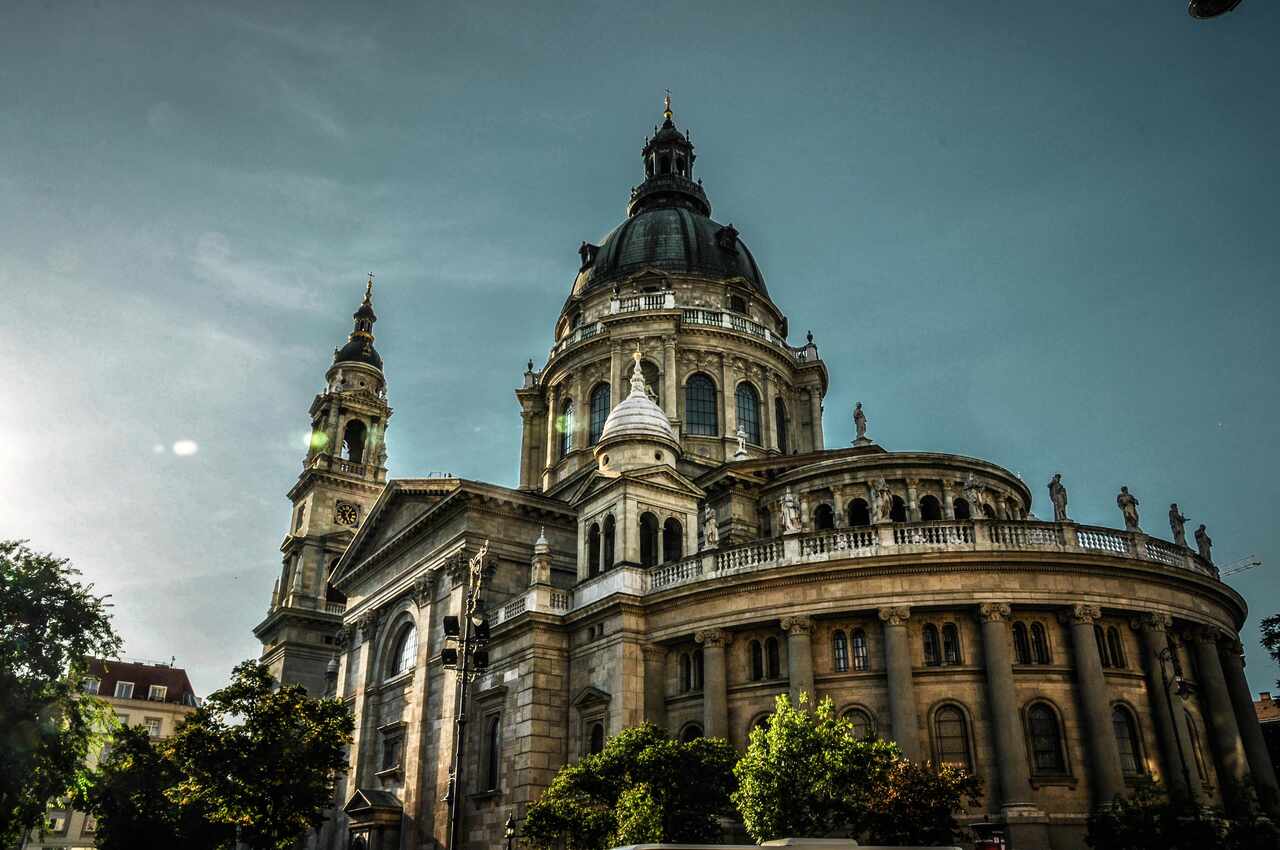
The façade of St. Stephen’s Basilica in Budapest is filled with symbolic sculptures and detailed artwork.
Above the entrance, you’ll see the inscription “EGO SUM VIA VERITAS ET VITA” (“I am the way, the truth and the life”), setting a spiritual tone as soon as you arrive.
The pediment features a central image of the Virgin Mary holding the Infant Jesus, surrounded by Hungarian kings and saints.
In the niches of the two towers stand the four great Western Fathers of the Church (St. Ambrose, St. Jerome, St. Augustine and St. Gregory the Great) while the drum of the dome is decorated with seated figures of the four Evangelists, each facing a different cardinal direction.
A row of statues representing Jesus Christ and the twelve Apostles lines the gallery on the east side, adding to the monumental character of the building. Over the Apostles’ Gate, a marble medallion by Károly Senyei depicts St. Stephen, the patron saint of the basilica.
The semicircular mosaic above the entrance, created by artist Mór Thán, shows Christ enthroned on the clouds and is one of the most beautiful details to admire before stepping inside.
Opening hours and ticket prices
St. Stephen’s Basilica has separate tickets depending on what you want to visit: the main church, the Treasury, the panoramic tower or a combination of all three.
Tickets can be bought both online and in person, but buying ahead helps you avoid the small line that sometimes forms at the entrance.
Ticket prices
Below are the current ticket prices for St. Stephen’s Basilica in 2025/2026:
-
Adult ticket – Church only: 2.400 Ft (≈ € 6,30)
-
Group ticket – Church (15+ people): 1.600 Ft (≈ € 4,20)
-
Adult ticket – Panoramic Tower + Treasury: 4.500 Ft (≈ € 11,80)
-
Group ticket – Panoramic Tower + Treasury: 3.600 Ft (≈ € 9,50)
-
Adult combined ticket – Church + Tower + Treasury: 6.200 Ft (≈ € 16,30)
-
Group combined ticket (15+ people): 4.700 Ft (≈ € 12,40)
-
Wednesday organ demonstration & concert: 9.900 Ft (≈ € 26,00)
You can buy your tickets in three ways:
- On the official basilica website;
- At the ticket desk on-site;
- On GetYourGuide, which is the most convenient option if you prefer keeping all your bookings in one place.
If you buy through this link, I earn a small commission at no extra cost to you — it helps me fund the experiences I share here on the blog and on TikTok.
And if this is your first purchase on the GetYourGuide app, use my code BUDAPESTFORTOURISTS5 to get 5% off.
Opening hours for visitors
St. Stephen’s Basilica has different opening times for the main church and for the panoramic terrace/treasury. As a general rule, the church opens later on Sundays due to morning mass, while the terrace stays open a bit longer.
Church hall (main church):
- Monday–Saturday: 09:00–18:00
- Sunday: 13:00–18:00
Panoramic Terrace + Treasury:
- Every day: 09:00–19:00
Mass times
If you’re visiting during mass, the Basilica is free to enter. It’s a beautiful opportunity to see the church in a more intimate and emotional atmosphere, often accompanied by live organ music that fills the entire space.
Just remember that during mass you can only stay in the main church. The Treasury and the Panoramic Tower require a ticket.
Here is the current mass schedule:
Weekday Masses (Monday–Saturday)
- 07:00 – Mary’s Chapel
- 18:00 – In the Basilica
Sunday & Holiday Masses
- 08:30 – In the Basilica
- 10:00 – High Mass (Basilica)
- 12:00 – In the Basilica
- 16:00 – Holy Mass in English
- 18:00 – In the Basilica
If you choose to enter during mass to admire the church, do so quietly and respectfully. You’re welcome to stay at the back, watch the ceremony, and enjoy the organ music. Just keep your voice down, silence your phone and move gently so you don’t disturb the people who are there to pray.
St. Stephen’s Basilica concerts
St. Stephen’s Basilica is also one of the most important classical music venues in Budapest. Since its consecration in 1905, the basilica has played a major role in the city’s musical life, hosting organ recitals, choral performances and classical concerts that take advantage of its exceptional acoustics.
Over the years, the church’s organists have always been highly respected musicians, many of whom have performed internationally.
The basilica’s historic organ, dating back to 1905, remains the star of its musical program: a powerful, beautifully restored instrument that fills the entire space with sound. Several concerts take place throughout the week, including organ evenings and choir performances, and some programs are open to the general public. It’s always worth checking the current schedule before your visit!
And even if you’re not usually a classical music fan, hearing the organ inside the basilica is one of those unforgettable Budapest moments.
@budapestfortourists Here’s a little moment of the live organ music that plays at the end of Mass in St. Stephen’s Basilica. It’s absolutely beautiful, and if you want to experience it yourself, here’s when you can go: Mass schedule: • Weekdays: 6 PM (Hungarian) • Sundays & public holidays: 4 PM (English) and 6 PM (Hungarian) If you attend Mass, entrance to the Basilica is free. And it’s a lovely way to hear the organ without needing a concert ticket! #budapest #ststephensbasilica #organmusic #traveltips ♬ original sound - Budapest for Tourists
Tips for visiting St. Stephen’s Basilica
Visiting St. Stephen’s Basilica is straightforward, but a few simple tips can make your experience even better:
- Arrive early or close to sunset for the best light: the façade looks especially beautiful in the golden hour, and the terrace views are stunning at this time of day;
- The dome terrace can be windy: even on warmer days, bring a light layer. In winter, it can feel much colder than at street level;
- Plan extra time if you want to see the Treasury: the exhibition is bigger than most people expect and includes important religious artifacts, relics and historical items;
- Check the schedule if you want to attend a mass or concert: organ concerts are popular and held regularly. Masses also continue during visiting hours, so parts of the basilica may be quieter or restricted;
- Visit Szent István tér before or after your tour: the square is one of the most charming pedestrian areas in Budapest, with cafés, terraces and seasonal markets — perfect for a break or fotos!
Nearby attractions to combine your visit
St. Stephen’s Basilica is in the heart of downtown Pest, making it easy to pair your visit with several major landmarks and charming streets nearby.
Andrássy Avenue
Just a short walk away, this UNESCO-listed boulevard is perfect for strolling past grand buildings, designer shops and cafés. It also leads directly to the Hungarian State Opera.
The Hungarian State Opera
Only a few minutes away via Andrássy Avenue, the Opera House is a beautiful example of Neo-Renaissance architecture and offers guided tours throughout the day.
The Hungarian Parliament Building
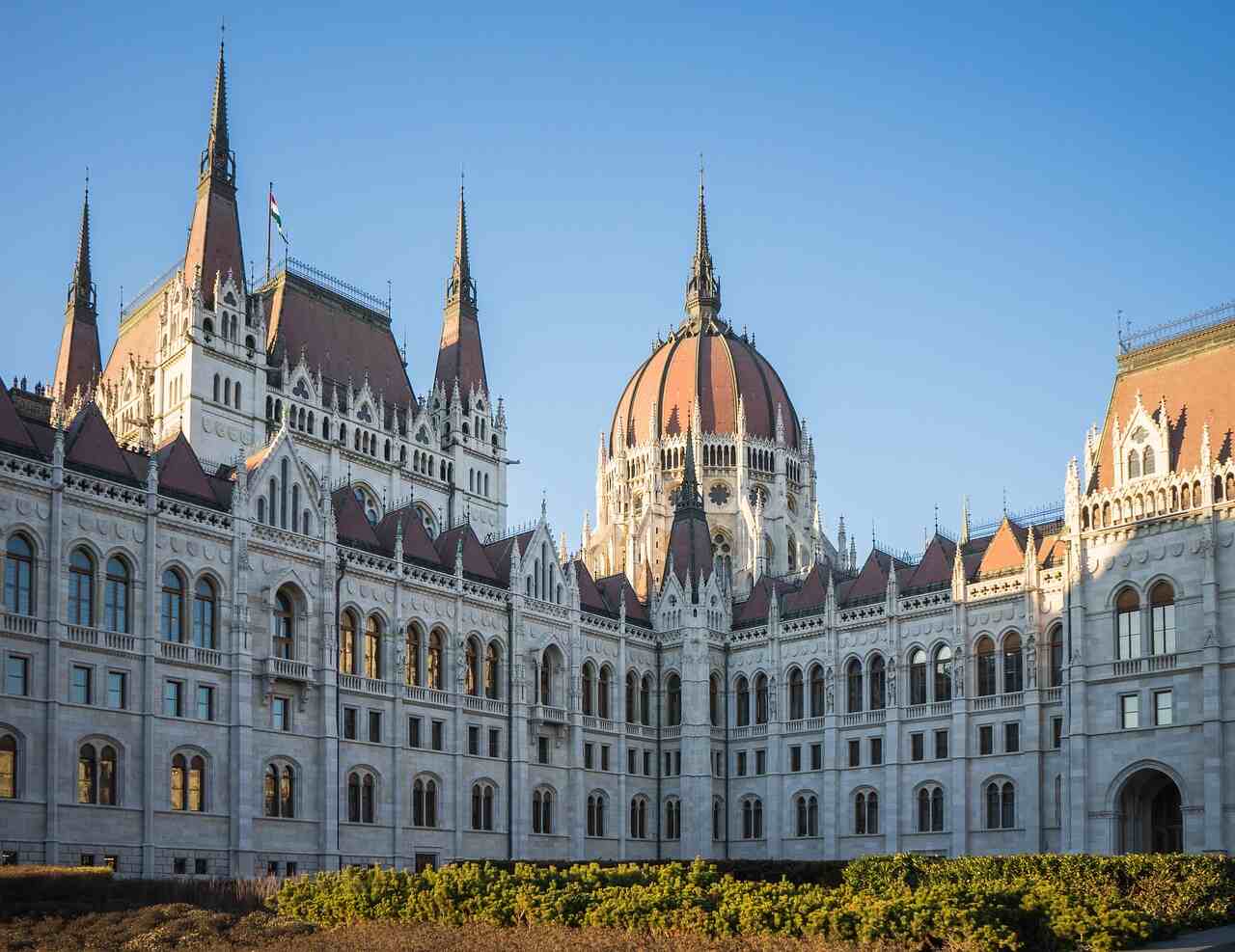
One of the most iconic sights in Budapest, the Parliament stands only 10–15 minutes away on foot. Going for a walk toward the Danube after visiting the basilica is a great way to enjoy the river views.
Szabadság tér (Liberty Square)
This elegant square is known for its impressive architecture, peaceful green space and historic monuments. It's a quiet contrast to the lively Szent István tér.
The Danube Promenade
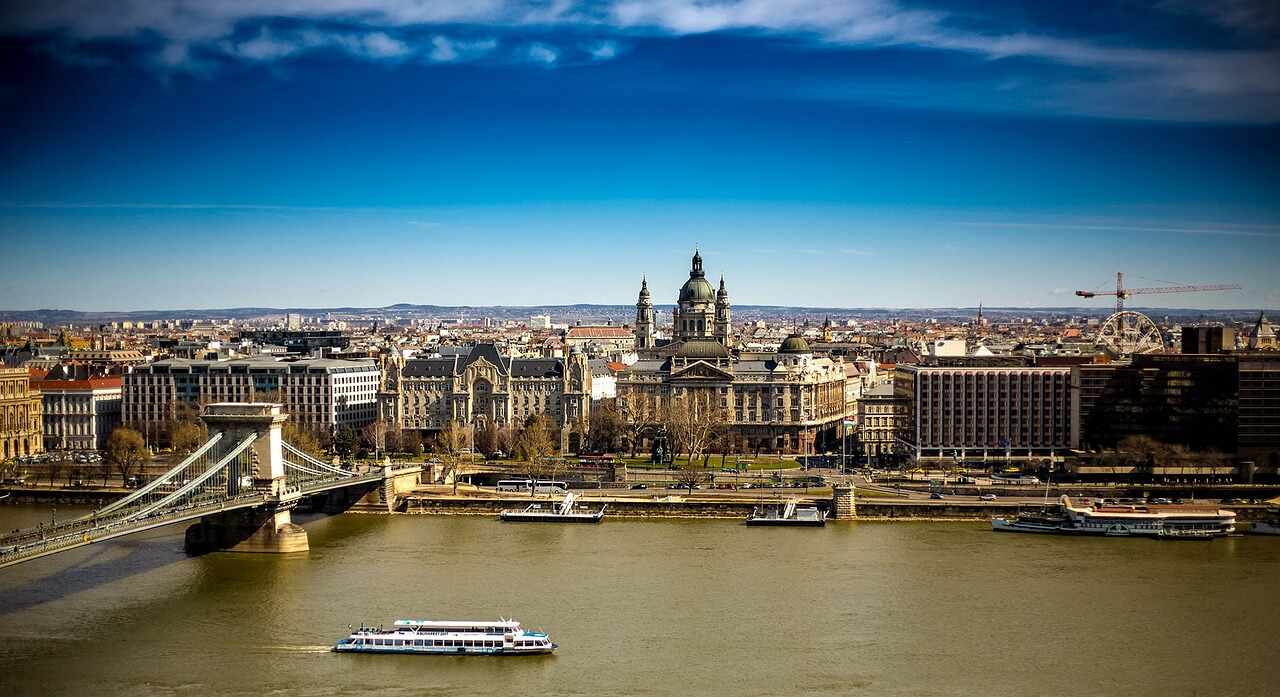
A gentle walk from the basilica brings you to the riverside path, ideal for photos of the bridges, Buda Castle and Gellért Hill.
Váci Street & Vörösmarty Square
If you continue south, you’ll reach one of Budapest’s main shopping areas, full of stores, cafés and traditional confectioneries. Vörösmarty Square also hosts markets and events throughout the year.
@budapestfortourists Wanna go shopping in Budapest? Váci Street has it all, from international brands to local gems 🛍️🛍️🛍️ #creatorsearchinsights #budapest #traveltips #shoppinginbudapest ♬ Roman d'Amour - Alastair Lane & Sarah Degny
Erzsébet tér & the Budapest Eye
Just a few minutes from the basilica, Erzsébet tér is a lively urban park, popular for its green space, fountains and youthful atmosphere.
Here you’ll also find the Budapest Eye, a giant Ferris wheel offering great views of downtown Pest. A fun and accessible experience to pair with your visit!
FAQ
Before planning your visit, here are the questions travelers ask most often about St. Stephen’s Basilica — from tickets to dress code, mass access and practical tips that make your visit smoother.
Is St. Stephen’s Basilica free to visit?
Only during mass. You can enter the main church for free while the service is happening, but the Treasury and the Panoramic Tower are never free. Outside mass hours, the church also requires a ticket for sightseeing.
Can I visit during mass?
Yes, you can enter the church for free, but only to stay quietly at the back and watch the service. Sightseeing isn’t allowed, and the Treasury and Tower must be paid separately if you want to visit them afterward.
How long does a visit take?
Around 30–45 minutes for the church, 15–20 minutes for the Treasury, and 30–45 minutes for the Tower, depending on photos and crowds.
Is there a dress code?
There’s no strict dress code enforced at the entrance, and many visitors enter with summer clothing without issues. Still, because it’s an active church, it’s considerate to dress a bit more modestly if possible, or carry a light scarf to cover your shoulders during your visit.
Do I need to book tickets in advance?
Not required, but buying online can save time, especially during weekends and in summer.
What’s the best time to visit St. Stephen's Basilica?
Mornings are quieter inside the church. For the tower, late afternoon offers the best light and views.
Conclusion
St. Stephen’s Basilica is one of those places that stays with you long after you leave Budapest. Whether you come for the panoramic tower, the architecture, the relic, the concerts or simply to sit quietly inside the main church, the visit always feels special.
And now that you know how the tickets work, what to see inside and how to plan your visit, exploring St. Stephen’s Basilica Budapest becomes much more enjoyable!
If you want to keep planning your trip, don’t miss my guide to the must see and do in Budapest, with the top experiences you shouldn’t leave the city without trying.