Budapest currency: what you need to know before your trip
Content
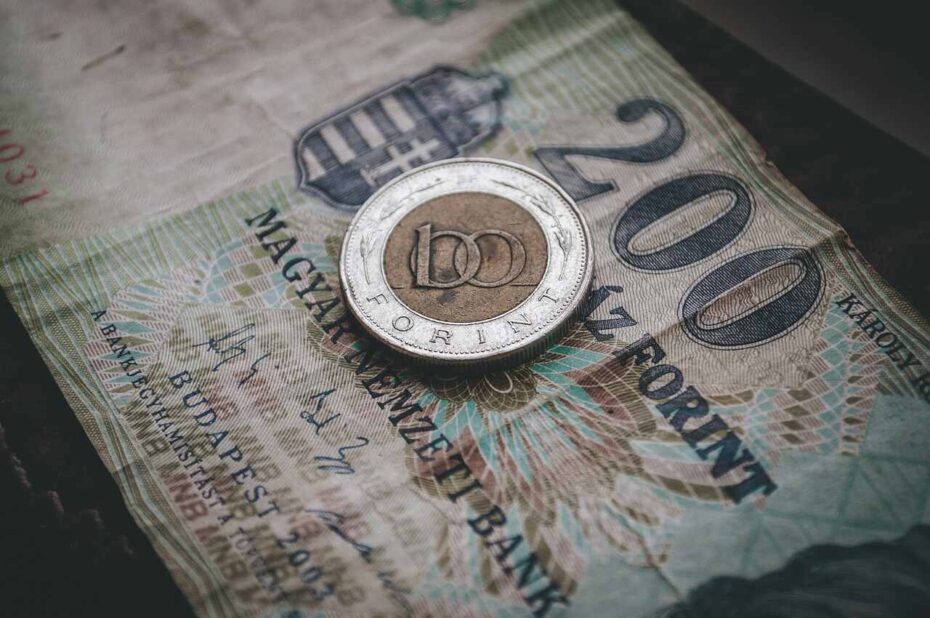
No, Budapest doesn’t use the euro. Shocking, I know. Even though Hungary is part of the European Union, the country still uses its own currency called the Hungarian Forint (HUF).
At first, it looks a bit chaotic. The numbers are huge, full of zeros, and if you’re used to euros, dollars or pounds, seeing “4,000” on your McDonald’s receipt feels like you accidentally bought the whole restaurant 😂 But relax: it’s not expensive, it’s just how the Forint works.
And the good news is that you get used to it super fast. For example, a fast-food meal usually costs around 3,500–4,000 HUF, which is roughly €9–11 or $10–12 depending on the day’s rate. Totally normal for a European capital.
So don’t stress. In this guide I’ll walk you through everything you need to know about Budapest’s currency, how to convert it and when you actually need cash.
What currency does Budapest use?
Budapest uses the Hungarian Forint (HUF), written as HUF or ft. And you’ll see it everywhere: restaurants, cafés, supermarkets, public transport, museums… Pretty much any place that takes money.
Some touristy spots accept euros, but the exchange rate is so bad it should be considered a scam. In short: never pay in euros!
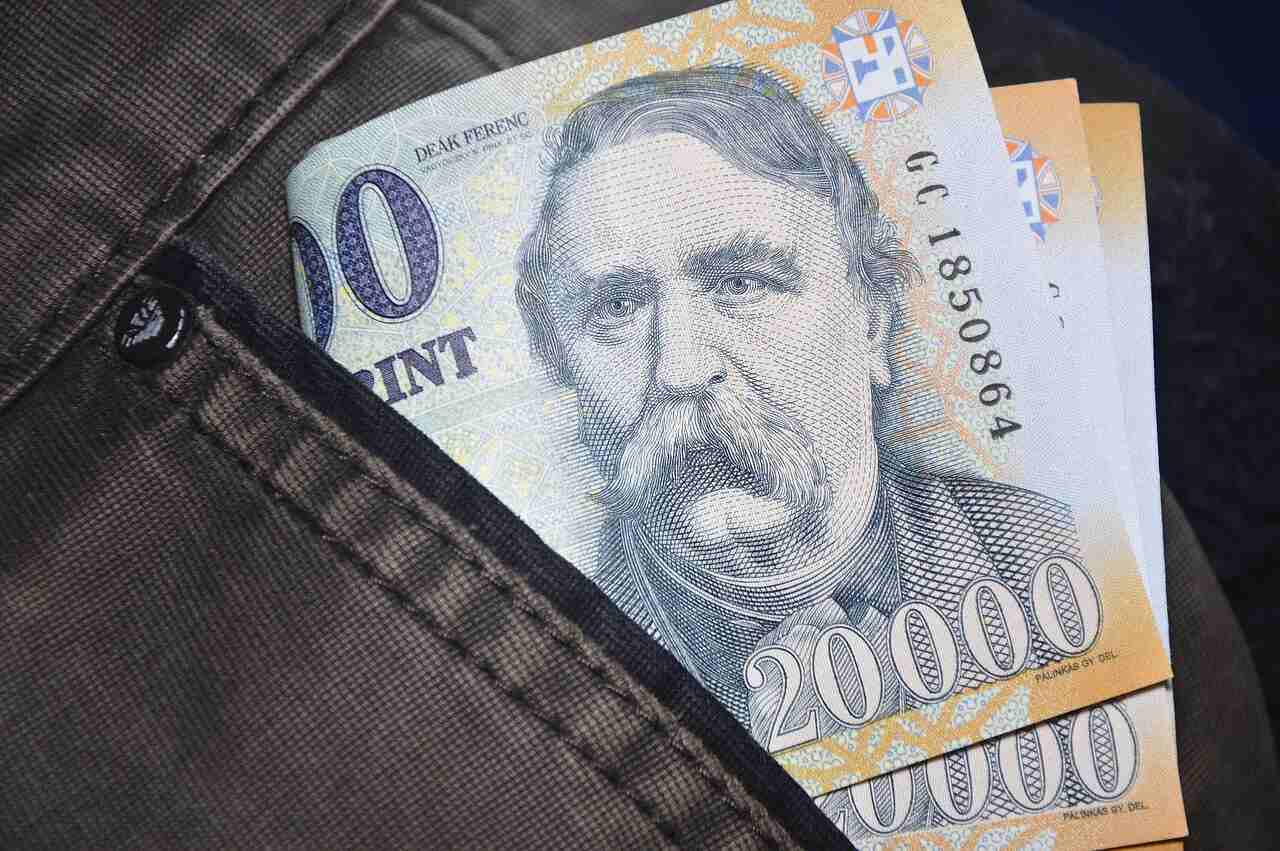
The Forint has been around since 1946 and comes in notes of 500, 1,000, 2,000, 5,000, 10,000 and 20,000 HUF. Yes, the numbers look high, but don’t panic. Carrying a 20,000-forint note doesn’t mean you’re rich. Unfortunately 🥲
Once you spend a day or two here, your brain magically adapts. You’ll look at a price and think “oh, that’s not bad” without even converting.
Currency conversions: understanding hungarian prices
You don’t need to convert every single price while you’re in Budapest. In fact, that gets exhausting really fast. A much smarter approach is to memorize how much 10, 100 or 1,000 units of your own currency are in Forint.
This is exactly what I did when I moved here. Once you know those three reference points, everything becomes way easier. You look at a price, compare it to your mental “cheat sheet” and instantly know if it’s cheap, normal or expensive.
Still, here are approximate conversions for the currencies most travelers use. Values change daily, but these ranges will help you build that mental reference.
Hungarian Forint to Euro
Most visitors compare prices to euros. Typically, €1 equals around 400 ft.
Reference points to keep in mind:
- 1,000 ft ≈ €2.5
- 4,000 ft ≈ €10
- 10,000 ft ≈ €25
Use these anchors to quickly judge restaurant menus, museum tickets and supermarket prices.
Hungarian Forint to Pounds
If you’re coming from the UK, the exchange usually stays around £1 ≈ 450–470 ft.
Useful reference points:
- 1,000 ft ≈ £2
- 5,000 ft ≈ £10–11
- 15,000 ft ≈ £30–33
Once you know these three, everything becomes intuitive.
Hungarian Forint to USD
For US travelers, the rate often sits close to $1 ≈ 360–380 ft.
Easy anchors:
- 1,000 ft ≈ $2.6–2.8
- 4,000 ft ≈ $10–11
- 10,000 ft ≈ $26–28
Great for estimating meals, coffee shops and thermal bath tickets.
Do I need cash in Budapest?
Honestly? Hardly ever. Budapest is a big, modern city, and card payments are accepted pretty much everywhere. Many places aren’t just card-friendly – they’re card only. This includes several festivals, food stalls, Christmas markets.
So no, you don’t need to walk around with a wallet full of cash. Your card, phone or smartwatch will handle 95 percent of your trip without stress.
That said, it’s still smart to carry a little bit of Forint for very specific situations. Public toilets, for example, usually cost 200–400 ft, and some still accept coins only. Tiny everyday moments like this are where cash saves you.
But if you’re visiting smaller towns or the Hungarian countryside, that’s a different story.
Outside Budapest, many places still operate on a cash-only basis. Some shops might accept cards but will make a face about it (and eventually give in). Others accept cards with no problem at all. It’s a mix.
So if you’re planning a day trip or heading anywhere outside the capital, bring a bit more cash than you would inside Budapest.
ATMs in Budapest
If you need cash, withdrawing from an ATM is usually easier and safer than exchanging money on the street. But there’s one thing you must pay attention to: fees and conversion tricks.
In Budapest, ATMs often try to “help” you by offering to convert the withdrawal into your home currency. It looks friendly, but it’s actually the most expensive option. This is called Dynamic Currency Conversion (DCC), and the rate is usually terrible.
Another tip: some ATMs charge withdrawal fees, others don’t. It depends on your bank and the ATM operator. If your card allows free international withdrawals, great. If not, one or two withdrawals during your trip are usually enough, since Budapest is mostly card-friendly.
Where to exchange money in Budapest? (Safely)
If you prefer exchanging money instead of using ATMs, no problem. Just choose your exchange place wisely. Budapest has great options, but also a few traps.
Here’s what you need to know:
- Avoid the airport at all costs: the exchange rate there is famously bad. Like “why did I do this?” bad. If you need money urgently when you land, exchange the absolute minimum just to get into the city, and do the rest later;
- Exchange places in the city are usually much better: In central Budapest, you’ll find dozens of exchange offices that offer fair rates. Compare at least two or three places before exchanging;
- Don’t exchange money on the street: anyone approaching you with “I give you good rate, my friend” is guaranteed to give you the worst rate possible or fake bills.
The best practice is to consider doing only a small amount. Budapest is extremely card-friendly, so you won’t need a big stack of cash!
Read also: Budapest airport to city: how to get to the center
Budapest currency FAQ
Before you plan your trip, here are the questions travelers ask the most:
How much is 1 euro in Budapest?
It can change daily, but usually €1 is around 400 ft. Don’t worry about the exact number. Just keep approximate reference values in mind, and you’ll quickly understand local prices.
Does Budapest use the euro?
No. Some touristy places may accept euros, but the exchange rate is always terrible. Locals pay in Forint, and you should too.
What currency is best to take to Budapest?
Bring euros, pounds or US dollars. These three are easy to exchange anywhere in the city and always get the best rates. So if your home currency isn’t widely traded, exchange it into one of the “big three” before your trip or just withdraw Forint from an ATM once you arrive.
Conclusion
Now you’re fully ready to handle money in Budapest without stress!
And since you’ve already mastered the practical side of your trip, it’s time for the fun part.
Check out our guide to the must-see and must-do experiences in Budapest and start planning the best moments of your visit.