Chimney Cake: everything you need to know and where to eat
Content
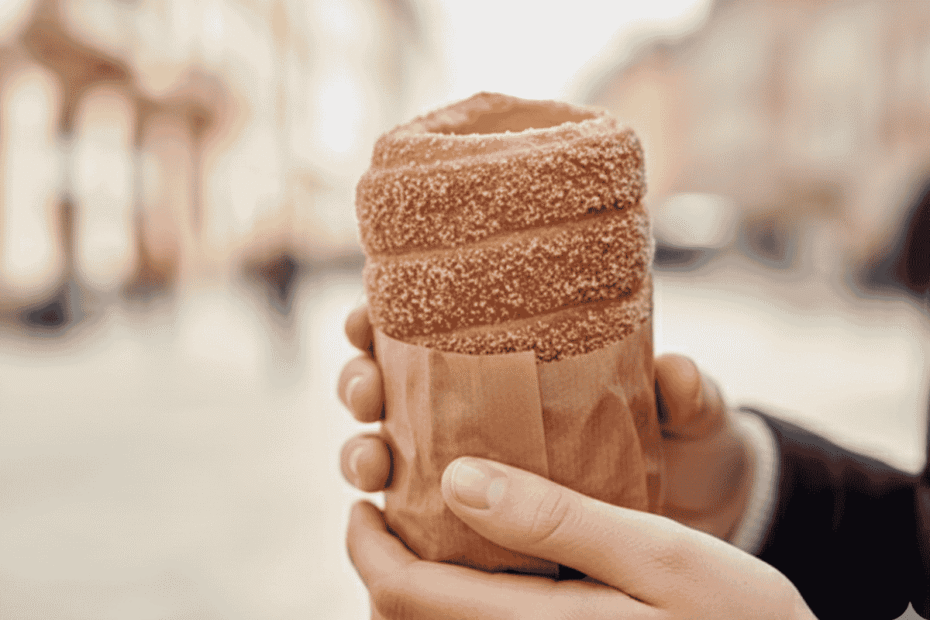
If there is one dessert you absolutely need to try in Hungary, it’s the traditional kürtöskalács, the original Hungarian name for what English speakers call “chimney cake”.
The word kürtő refers to a chimney-like shape, and kalács is a type of enriched sweet bread common in Central and Eastern Europe. So even though the English translation uses the word cake, chimney cake is, in fact, a bread!
This sweet, hollowed, spiral-shaped bread is one of the most traditional treats in the country and a classic you’ll see everywhere in Budapest, especially during the winter months.
The smell of sugar caramelizing over the fire and the warm cinnamon aroma drifting through the streets is one of those things that instantly makes the city feel cozy!
Below, you’ll find everything you need to know: what chimney cake is, how it’s made, where to eat it in Budapest, a bit of its history, the difference between the traditional and tourist-style versions, and even how to learn to make your own.
What is a chimney cake?
A chimney cake is a traditional Hungarian pastry made from a lightly sweet dough that’s rolled around a wooden cylinder, brushed with sugar, and roasted until the outside caramelizes.
The most authentic versions are baked over real charcoal, which gives the crust a deeper caramel flavor and a subtle smoky aroma you won’t get from electric grills.
Once it comes off the spit, it’s usually coated in classic toppings like cinnamon, vanilla sugar, walnut, poppy seed or coconut. The result is a warm, golden, slightly crispy shell with a soft, pull-apart interior — the version locals love the most.
Traditional Kürtöskalács vs tourist-style chimney cake
The classic Hungarian version is simple, light, and focuses on flavor rather than size. It usually comes with minimal toppings like cinnamon, sugar, or crushed nuts. It’s the version you’ll find in local bakeries, smaller markets, metro stations and family-run stalls.
But in the more central and touristy areas of Budapest, you’ll often see larger chimney cakes filled with ice cream, dipped in chocolate, covered in Nutella, or loaded with toppings.
These Instagram-friendly versions aren’t traditional, but they’re fun and very popular in places like Váci utca, around the Basilica and in the Christmas markets.
And even though they’re two completely different experiences, both versions are delicious. And my tip is to try both!
Where to eat chimney cake in Budapest
Chimney cake is easy to find in Budapest, but not all of them taste the same. Some stalls focus on the traditional recipe, while others offer more modern, tourist-friendly versions loaded with toppings.
Below, I’m listing the best places to try chimney cake in Budapest!
Molnár’s Kürtőskalács
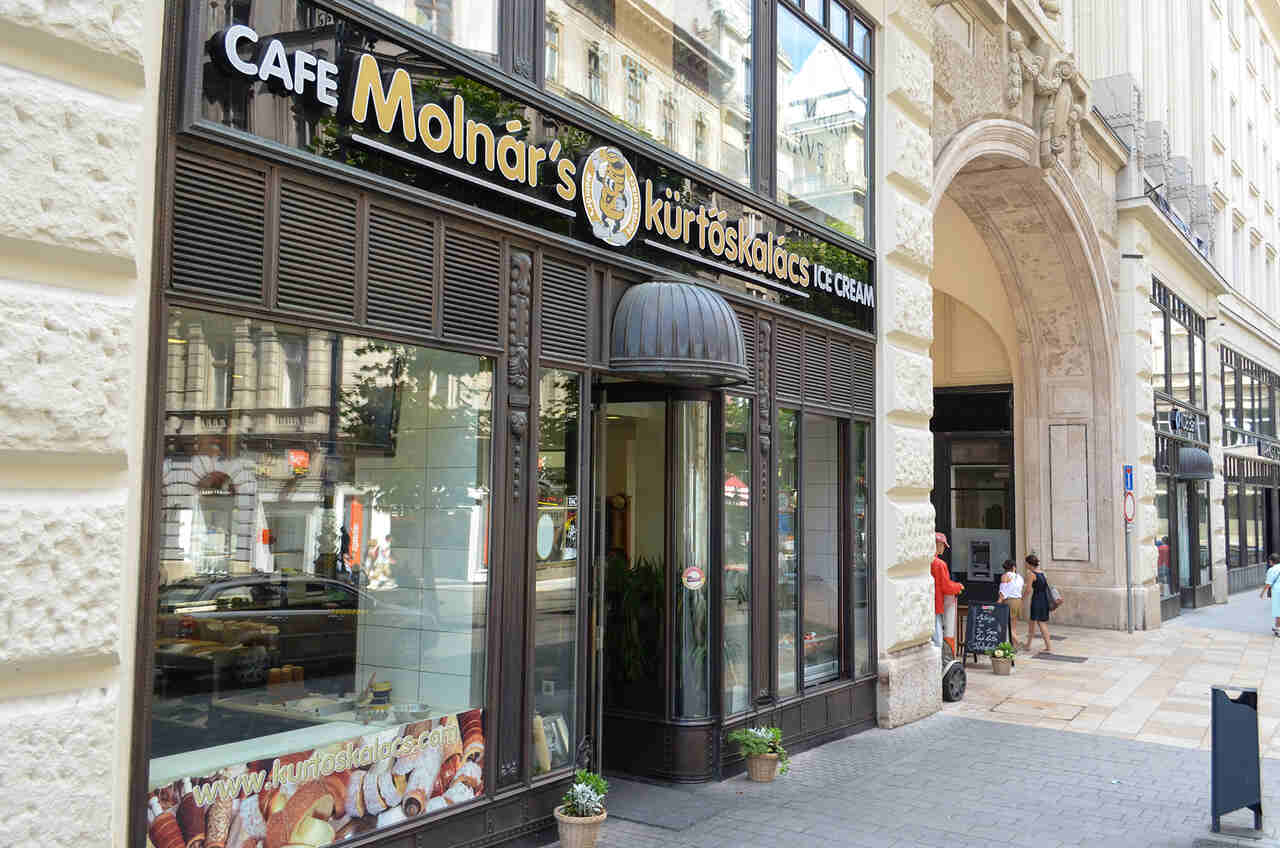
Located on Váci Street, Molnár’s Kürtőskalács is one of the most popular chimney cake shops in Budapest, offering both traditional kürtöskalács in eight classic flavors (like cinnamon, walnut, almond and coconut) and tourist-style versions filled with ice cream. It’s a convenient stop in the city center thanks to its indoor and outdoor seating, and although prices are higher than in other areas, it remains one of the best-known places to try chimney cake during your visit.
- Address: Váci u. 31, 1052 Budapest
- Open daily from 9:00 to 20:00
- Google Maps | Website | Instagram
Kató néni finomságai
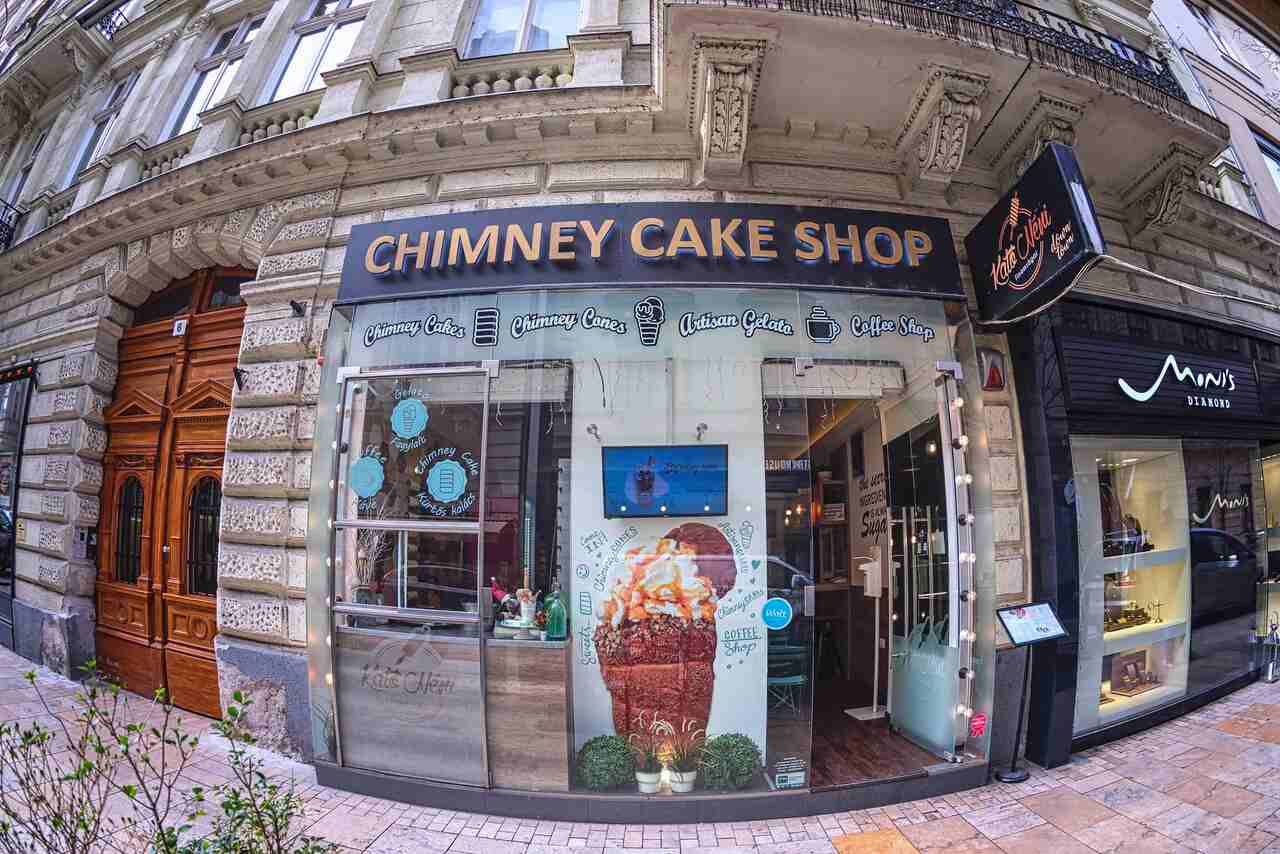
Kató néni is known for serving some of the freshest chimney cakes in Budapest, made from their family’s original recipe and entirely vegan, which makes it a great option for all travelers.
They have two permanent locations in the city: one near the Basilica and another inside City Park. Beyond the traditional versions, they offer fun tourist-style cones filled with ice cream, chocolate layers, creams, and seasonal toppings.
- Address 1: Állatkerti krt. 3, 1146 Budapest (City Park)
- Opening hours: Mon–Thu 10:00–19:00, Fri–Sun 10:00–20:00
- Address 2: Október 6. utca 6, 1051 Budapest (close to the Basilica)
- Opening hours: Mon–Sun 11:00–22:00
Google Maps City Park | Google Maps Basilica | Website | Instagram| TikTok
Kürtős Legenda
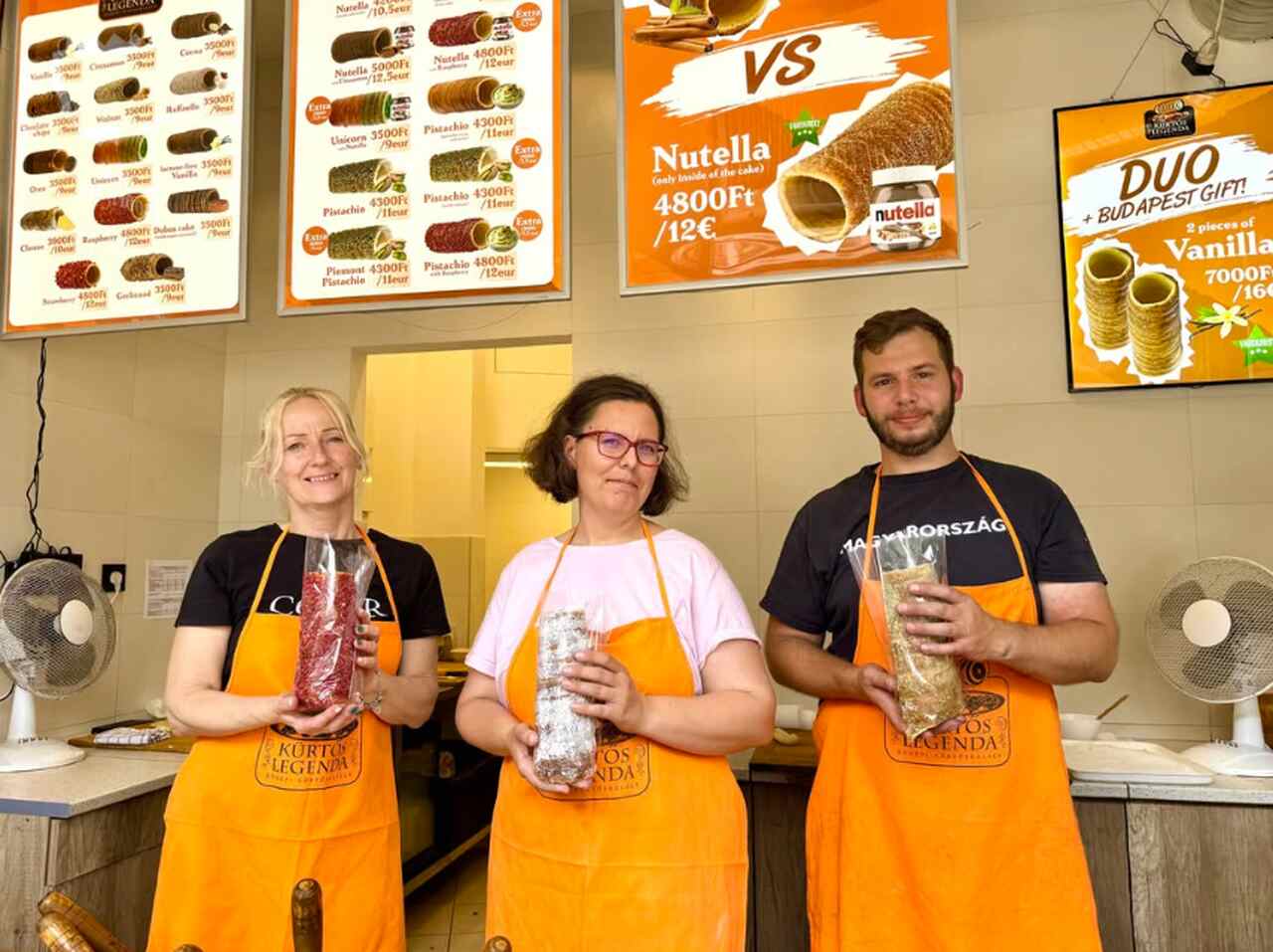
Kürtős Legenda is one of the most innovative chimney cake brands in Hungary, known for transforming the traditional kürtöskalács into a full dessert experience.
They use their own family-developed recipe, offer vegan options, and have an impressive menu ranging from classic chimney cakes to smaller party|snack versions, ice-cream–filled cones, savory party|lunch creations, and even frozen party|grill chimney cakes you can make at home.
You’ll find them at big events and Christmas markets across the country, but they also have two permanent shops in Budapest: one at St. Stephen’s Basilica and another near Fisherman’s Bastion.
- Address 1: Szent István tér 11/B, 1051 Budapest (Basilica)
- Opening hours: Daily 10:00–22:00
- Address 2: Tárnok utca 15, 1014 Budapest (Fisherman's Bastion)
- Opening hours: Daily 10:00–20:00
Google Maps Basilica | Google Maps Fisherman's Bastion | Website | Instagram
Stalls around the city
If you want the most local (and usually the cheapest) chimney cake experience, look for the small street stalls scattered around Budapest. You’ll find them near metro stations, busy sidewalks, local markets, and in different neighborhoods throughout the city.
Most stalls sell the traditional kürtöskalács with simple toppings like cinnamon, sugar or walnut, although a few also offer extra flavors depending on the day. The options aren’t as varied as in dedicated shops, but the experience feels much more authentic, and the prices are noticeably lower.
Chimney cake recipe
You’ll see chimney cakes being prepared all over Budapest, and watching the process is almost as fun as eating them. Even though every shop has its own twist on the recipe, the base is always the same: a lightly sweet bread dough, a wooden cylinder, and open heat.
A classic kürtöskalács is made with:
- flour
- yeast
- milk
- sugar
- butter or oil
- eggs
- a pinch of salt
- vanilla or lemon zest (optional)
- granulated sugar for caramelizing
- toppings like cinnamon, walnut, cocoa, coconut or vanilla sugar
And this is how it's made:
- The dough is rolled out, cut into long strips, and wrapped around a wooden or metal spit
- It’s brushed with melted butter or oil, then rolled in sugar
- The cylinder goes over open heat or into a rotating grill, where it cooks until the sugar caramelizes
- While still warm, it’s coated with toppings like cinnamon or walnut
- It slides off the spit in one piece, creating the famous hollow chimney shape
Chimney cake workshop in Budapest
If you want a hands-on experience and the chance to make your own chimney cake from scratch, the Chimney Cake Workshop is one of the most fun activities you can do in Budapest — especially in winter. The class takes place indoors, right in the city center near St. Stephen’s Basilica, which makes it a perfect option for cold, windy or rainy days.
@budapestfortourists Chimney Cake Workshop in Budapest! 😋 I booked this experience through @GetYourGuide and it was soooo fun! The class takes place right in the city center, close to the Basilica, and you also learn about the history of the dessert. If you want to join the workshop too, the link is in my bio! And if you’re using the app for the first time, you can use the code BUDAPESTFORTOURISTS5 for 5% off! @getyourguidecommunity 🌎✈️🌴 #creatorsearchinsights #budapest #chimneycake #getyourguide #getyourguidecommunity ♬ Bake & Shake - ZayZonic
During the workshop, each participant prepares three chimney cakes, learning how to roll the dough, wrap it around the wooden spit and caramelize the sugar layer. While you bake, the instructor also shares stories about the history of kürtöskalács and how this Transylvanian treat became such an iconic part of Hungarian culture. At the end, you can enjoy your creations warm or take them home.
The experience is easy, beginner-friendly, and a great activity for couples, families, or anyone who loves trying local traditions. You can book the class directly through GetYourGuide, which makes the reservation process simple and reliable.
A short story of the Hungarian chimney cake
Chimney cake may be everywhere in Budapest today, but its roots go back to Transylvania, a region that was historically part of the Kingdom of Hungary and is now located in modern-day Romania. Because of this shared history, kürtöskalács is still considered a traditional Hungarian pastry, even though its origin point lies across today’s border.
The first known recipe appeared in 1784, in a Transylvanian cookbook written by Countess Mária Mikes. But the idea behind chimney cake is even older. Medieval manuscripts from the 15th century describe spit-baked cakes cooked over open embers — the early ancestors of what would eventually become kürtöskalács.
By the end of the 18th century, the recipe had spread throughout Hungarian-speaking regions of the Austro-Hungarian world. It continued to evolve, gaining the caramelized sugar coating we know today. The earliest versions weren’t even sweet, and the first mention of a sugar-almond coating only appeared in a Hungarian cookbook in 1876.
So while chimney cake has changed over the centuries, its essence stayed the same: a warm, festive, communal pastry with deep Hungarian cultural roots.

FAQ about chimney cake
Here are some of the most common questions travelers have about chimney cake!
How many calories are in a chimney cake?
A traditional chimney cake has around 400–600 calories, depending on its size and the topping. Versions filled with ice cream can easily go above 700–900 calories.
Are chimney cakes vegan?
The classic Hungarian recipe is not vegan, since it usually contains milk, butter and eggs. But some shops — like Kató Néni finomságai — make completely vegan kürtöskalács using plant-based ingredients.
What is the best chimney cake in Budapest?
If you want something classic and consistent, Molnár’s is the most famous option. For creative flavors and vegan versions, Kató néni is a great choice. And for a fun, local experience, the street stalls offer delicious traditional kürtöskalács at great prices.
Where can I find the cheapest chimney cake in Budapest?
The cheapest chimney cakes are usually sold at street stalls, especially near metro stations or outside the main tourist areas. Prices here are much lower than in dedicated shops or Christmas markets.
If you’re staying in the city center, there are two stalls at Deák Ferenc tér metro station, which is one of the easiest and most convenient spots to grab a traditional kürtöskalács on the go.
Conclusion
Chimney cake is one of those treats that instantly makes Budapest feel warm and magical, whether you try it at a Christmas market, pick one up from a street stall, or learn to bake your own in a workshop.
It’s simple, traditional, and deeply connected to Hungarian culture!
And f you want to explore even more of Hungary’s food culture, make sure to read my guide to the most traditional Hungarian dishes. It’s the perfect next step for planning what to eat during your trip!